Gluten-Free Atta vs Multi-Grain Atta: Which One is Right for You?
Confused between Gluten-Free Atta and Multi-Grain Atta? Find out the key differences, health benefits, and which flour is best for your needs — plus a common myth busted!
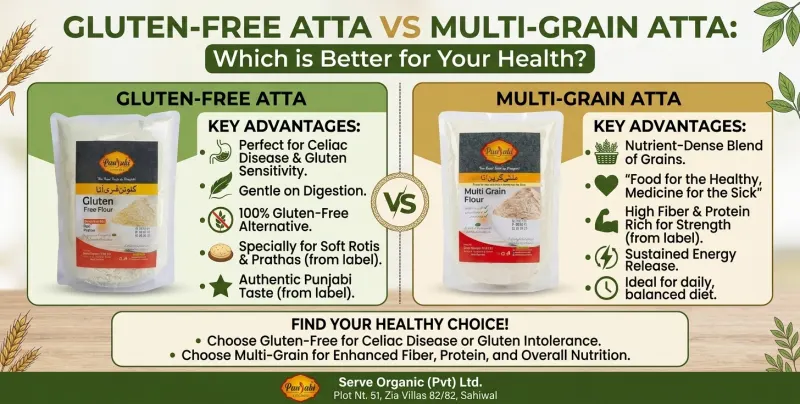
The Flour Confusion Every Pakistani Kitchen Faces
You're standing in the grocery aisle (or scrolling an online store), and you see two options: Gluten-Free Atta and Multi-Grain Atta. Both sound healthy. Both cost more than regular wheat flour. And both claim to be better for you.
But here's the question nobody clearly answers: Are they the same thing? And which one should YOU actually buy?
In this guide, we break down the real differences between these two flours — no confusing nutrition jargon, just clear answers for everyday Pakistani kitchens.
What is Gluten-Free Atta?
Gluten-Free Atta is flour that contains zero wheat. Instead, it is made from naturally gluten-free grains and ingredients such as:
- Rice flour
- Chickpea flour (besan)
- Corn flour (makki)
- Jowar (sorghum)
- Millet (bajra)
The word "gluten" refers to a protein naturally found in wheat, barley, and rye. For most people, gluten is harmless. But for people with celiac disease or gluten sensitivity, even a small amount can cause serious digestive issues, bloating, fatigue, or worse.
Gluten-Free Atta solves this problem by removing wheat entirely from the blend.
Important: Gluten-free does NOT mean low-carb, tasteless, or diet flour. It simply means no gluten protein — nothing more, nothing less.
What is Multi-Grain Atta?
Multi-Grain Atta is a blend of multiple grains — usually including wheat as the base, mixed with other healthy grains like:
- Barley (jau)
- Oats (jao)
- Millet (bajra)
- Flaxseeds (alsi)
- Sorghum (jowar)
The idea is simple: instead of eating just one grain (plain wheat), you eat many grains in every roti — which means you get a wider variety of nutrients, fiber, and minerals in one go.
Multi-Grain Atta is ideal for people who want to eat healthier without giving up regular rotis. The rotis still look, taste, and feel very close to normal wheat rotis — just nutritionally superior.
⚠️ The Biggest Myth: "Multi-Grain Atta is Gluten-Free"
This is the most common confusion we see — and it can be genuinely harmful if ignored.
Multi-Grain Atta is NOT gluten-free.
Since most multi-grain blends still contain wheat as the dominant grain (usually 60–70% of the blend), they still contain gluten. If you or a family member has celiac disease or gluten intolerance and you switch to multi-grain atta thinking it is safe — it is not.
If you need to avoid gluten for medical reasons, always choose certified Gluten-Free Atta.
Gluten-Free Atta vs Multi-Grain Atta: Side-by-Side Comparison
| Feature | Gluten-Free Atta | Multi-Grain Atta |
|---|---|---|
| Contains Wheat? | ❌ No | ✅ Yes (usually) |
| Contains Gluten? | ❌ No | ✅ Yes |
| Safe for Celiac / Gluten Intolerance? | ✅ Yes | ❌ No |
| Roti Texture | Softer, slightly different texture | Very close to regular wheat roti |
| Nutritional Variety | Good (rice, chickpea, corn) | Excellent (5–10+ grains) |
| Best For | Medical gluten intolerance, celiac | General health, weight management, diabetes |
| Taste | Mild, slightly nutty | Wholesome, earthy, close to wheat |
| Fiber Content | Moderate | High |
| Good for Weight Loss? | Depends on diet | ✅ Yes (high fiber = more satiety) |
| Good for Diabetes Management? | Moderate benefit | ✅ Yes (low glycemic index) |
Who Should Choose Gluten-Free Atta?
You should pick Gluten-Free Atta if:
- You have been diagnosed with celiac disease
- You experience bloating, gas, or stomach pain after eating regular wheat roti
- A doctor has recommended a gluten-free diet
- You have a family member with gluten sensitivity and want a safe option for the whole household
👉 Shop SKW Store Gluten-Free Flour (1kg) →
Who Should Choose Multi-Grain Atta?
You should pick Multi-Grain Atta if:
- You want to eat healthier without making dramatic changes to your daily diet
- You are trying to lose weight or manage portion sizes
- You have diabetes or pre-diabetes and want to control blood sugar spikes
- You want more fiber, vitamins, and minerals in every roti
- Your family resists "health food" — multi-grain rotis taste almost identical to regular ones
👉 Shop SKW Store Multi-Grain Flour (1kg) →
Quick Cooking Tips for Both Flours
Gluten-Free Atta — Tips for Perfect Rotis:
- Use warm water (not cold) when kneading — it helps bind the dough better
- Add a small amount of oil or ghee to the dough to keep rotis soft
- Let the dough rest for 10–15 minutes before rolling
- Roll slightly thicker than usual — gluten-free dough tears more easily when too thin
Multi-Grain Atta — Tips for Perfect Rotis:
- Use it as a 1:1 replacement for regular atta — no recipe changes needed
- Knead well for at least 5–7 minutes for soft, elastic dough
- Store in a cool, dry place in a sealed container — multi-grain flour can go stale faster than plain wheat
- Works great for parathas, puris, and chapattis equally
Final Verdict: Which One Should You Buy?
Here's the simplest answer:
- Medical need (celiac/gluten intolerance)? → Choose Gluten-Free Atta
- General health, weight, or diabetes management? → Choose Multi-Grain Atta
- Not sure? → Try Multi-Grain first. It's the easier transition and benefits almost every household.
Both flours are available at SKW Store — freshly packed, chemical-free, and delivered to your doorstep across Lahore with Cash on Delivery.
👉 Order Gluten-Free Flour | 👉 Order Multi-Grain Flour
Have questions about which flour is right for your health needs? Feel free to contact us — we're happy to help.